Tuesday, October 10, 2023

A.I.'s Displacement of Human Jobs

A.I. and Job Loss

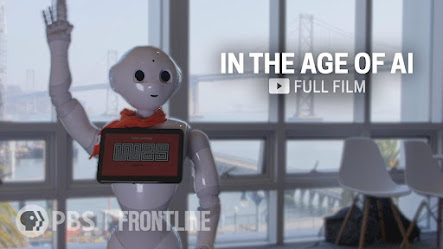
The thought of artificial intelligence was scary. With several movies about robots attacking humans or taking over the earth, most famously "The Terminator" franchise, it would be hard to be unafraid of A.I. before it became what it is today. With a variety of different forms of A.I. it's not hard to imagine the previously futuristic, super advanced A.I. being in our world today, though its nowhere close to being able to really displace humans. With the rise of A.I. comes a series of issues that people become aware and afraid of. The most pressing issue is that of jobs. A.I is coming whether we like it or not, Kai-Fu Lee believes that "about 50% of jobs will be somewhat or extremely threatened by A.I. in the next 15 years or so" as he admits in an interview. The video "In the Age of AI" Kai-Fu goes on to explain that jobs that are a pure quantitative analytical process will be easier to take than those that require hand-eye coordination and have other obstacles that robots and A.I. are just not capable of yet, but all jobs will be in danger of being taken eventually. 

Kai-Fu's response to this repetition of a "job destruction" wave intrigued me. He said that when going through history he thinks that it's only trustable if it is multiple repetitions of similar events, not a once-in-a-blue-moon occurrence. He goes on to say that there are only about three events that are on the same scale as this A.I. revolutions: the steam engine, electricity, and the computer revolution. I thought it interesting that with how many innovations that were made through our history, only those three are as big as the current revolution happening now. All the other events were "too small" to compare to the age of A.I. in the grand scale of our history. 

Source: https://www.youtube.com/watch?v=5dZ_lvDgevk&ab_channel=FRONTLINEPBS%7COfficial 

Whistleblowers


Keeping the government honest is a job of the public and government honesty is maintained in a significant way thanks to whistleblowers. A whistleblower is a person who reports wrongdoing misconduct, or unethical behavior within a government institution or agency. They serve as watchdogs who reveal corruptions, power abuse, and demand accountability.

Whistleblowers can be considered "a symptom of the breakdown of internal checks and balances on our governments and corporations". There are several negatives to whistleblowing, such as the internal destruction of trust within the government/institutions, interference with decision making within organizations, and can create fear when it comes to wanting to retaliate or speak out. Whistleblowers play a crucial role in maintaining accountability and transparency, which are essential in preventing or halting harm to society. Sometimes whistleblowing results in protection of the environment, the saving of government money and the saving of lives. 

The fear of being punished for whistleblowing is enough to deter people from doing so, but the "Whistleblower Protection Act" (WPA) goes around this. The WPA protects federal employees and applicants for employment who lawfully disclose information they reasonably believes evidences a: violation of law, rule, or regulation; gross mismanagement, gross waste of funds, abuse of authority, or substantial  and specific danger to public health or safety. Under the WPA, certain federal employees may not take, fail to take, or threaten to take; any personnel action against an employee or applicant for employment because of the protected whistleblowing. Personnel actions can include poor performance review reassignment, demotion, suspension, or termination. The WPA also prohibits personnel action against employees for engaging in actions such as filing an appeal, complaint, or grievance; helping someone else file or testify on their behalf; cooperating with or disclosing information to the Office of Special Counsel or an inspector General; or refusing to obey an unlawful order. 

Source: Group 2: Mediasphere presentation 

Tuesday, October 3, 2023

The Five Eyes

 The Five Eyes?

The Five Eyes is an Intelligence alliance comprising Australia, Canada, New Zealand, the United Kingdom, and the United States. These countries are parties to the multilateral UK-USA Agreement, a treaty for joint cooperation in signals intelligence, but what does that actually mean? Let's start by breaking it down bit by bit.


"An intelligence alliance comprising Australia, Canada, New Zealand, the United Kingdom, and the United States. These countries are parties to the multilateral UK-USA Agreement, a treaty for joint cooperation in signals intelligence."

Breaking it down piece by piece, I'll start from the beginning: 

  • Intelligence Alliance: An alliance where the participating members engage in intelligence gathering and security. 
  • Multilateral: "Agreed upon or participated in by three or more parties, especially the governments of different countries."
  • UK-USA Agreement: Multilateral agreement for cooperation in signals intelligence between AU, CA, NZ, UK, & US. The 7 page agreement that is recognized as one of the most important documents from the Cold War.
  • Signals Intelligence: Intelligence gathering by interception of signals, whether communications through people or from electronic signals not directly used in communication.
So essentially, the Five Eyes are a group of countries who, in the year 1946, made an agreement to share signals intelligence, but why?

Often referred to as the world’s most significant intelligence alliance. The original group of 5 English speaking countries and their security agencies (Australian Signals Directorate, Canada's Communications Security Establishment, New Zealand's Government Communications Security Bureau, Britain's Government Communications Headquarters, and the National Security Agency of the USA) was formed in the year that followed WW2 in an “effort to share intelligence in the interest of National Security.” After WW2 the UK-USA Agreement was signed between what would become the NSA and the GCHQ (National Security Agency and Britain's Government Communications Headquarters). Eventually as it grew, specifically during the Cold War, British and U.S. intelligence agencies banded together to share signals intelligence.

The agreement initially confined to the UK and the US, but expanded to include Canada, Australia, and New Zealand by 1956. The agreement did not become public knowledge until 2005, and then it took another 5 years until the full text of the UK-USA Agreement was released by the British and American governments, this is also when it was first recognized.  The Five Eyes collaborates with Third Party countries like Denmark, France, Norway, and the Netherlands, becoming known as the Nine Eyes, and then later on the Fourteen Eyes, including Belgium, Germany, Italy, Spain, and Sweden. All information was available to the Five Eyes from the Nine and Fourteen Eyes and partners. The Nine eyes had access to all information from the Fourteen eyes and partners, but not vice versa. There was a lot of gatekeeping of information that happened. 

The Five Eyes alliance is a powerful intelligence network that upholds national security and tackles global threats, contributing to public safety. However, this power comes with a price: the blurred line between surveillance for safety and invasion of privacy. Edward Snowden's 2013 revelations highlighted the precarious balance between security and individual privacy rights. Our digital footprints, such as emails, phone calls, online shopping, and social media activity, could be open books, potentially read without our knowledge or consent. This reality fuels ongoing debates about privacy, state power, and civil liberties. The Five Eyes alliance's activities highlight the need for a delicate balance between security and individual rights, as privacy forms a cornerstone of democratic societies.

https://en.wikipedia.org/wiki/Five_Eyes

https://www.techtarget.com/whatis/definition/Five-Eyes-Alliance

https://www.forbes.com/advisor/business/what-is-five-eyes/#:~:text=Five%2C%20Nine%20and%2014%20Eyes%20Alliances&text=The%20Nine%20Eyes%20alliance%20includes,%2C%20Italy%2C%20Spain%20and%20Sweden

Our Privacy


Privacy is a subject that I didn't know much about, nor did I want to learn more about it, specifically the security of our privacy. I knew it was important, but didn't want to bother with it and just thought it wasn't something that would pertain to me. "With so many people in the world, why would my data be target." was probably my thought process. Taking this class and listening to a handful of interviews, TED Talks, and documentaries has taught me about the importance of protecting our privacy. 

A great case that involves a breach in the privacy of myself, my family and my friends' is that of our cell phones. Cell phones are essential communication tools in modern life, but they can also infringe on individual privacy. Knowing where a person's phone is located can reveal sensitive information, such as medical appointments, political activities, and sleep patterns. Law enforcement agencies can obtain this information without a warrant, and the federal government can use surveillance authorities to collect call records, contact lists, and text messages. This can compromise individual privacy and the security of personal information. 

Government organizations are lagging in setting cybersecurity guidelines for mobile devices, with 45% of the public sector lacking an acceptable-use policy. This lack of proper security measures can be harmful, particularly if dealing with confidential information. The Federal Mobility Group (FMG), chartered by the Federal CIO Council, has released a mobile management ecosystem that includes four strategic pillars: Unified Endpoint Management, Mobile Threat Defense, Native Mobile OS Security Functionality, and Mobile App Vetting. The government must evolve their policies and take proper precautions to counter potential threats and ensure the safety of all mobile devices. By implementing these measures, the government can better protect its citizens and ensure the security of mobile devices. 

To avoid constant surveillance, it's crucial to pay attention to your online activities and use a reliable proxy service to change your IP address. Encrypt your systems and store backups to protect your data. It's essential to consider how much information you should share on the web, as everything you say can be tracked and collated in a digital file. This privacy invasion is a complete invasion, and it's essential to protect yourself and your data. 

It's essential to stay aware of potential threats and take steps to protect your privacy.


https://www.egovreview.com/article/cybersecurity/64/how-do-governments-deal-mobile-security 

https://www.uscybersecurity.net/protect-yourself-from-privacy-invasion/

Tuesday, September 26, 2023

The First Television

Television, invented in 1884, was initially seen as a novelty and only around 50 people had one. However, it has since become one of the most innovative forms of entertainment, with viewers' viewing habits changing significantly since the 1940s and 1950s. TV technology has progressively improved over the years, with color TV debuting in the 1960s, cable in the 1970s, VCRs in the 1980s, and high-definition in the late 1990s. In the twenty-first century, viewers are watching programs on tablets, computers, and cell phones as they are on televisions. Electronic television, designed by Philo Taylor Farnsworth, was first successfully demonstrated in San Francisco on September 7, 1927. Electronic television uses electronic signals to produce images on a video screen, making it possible to watch shots from the moon or satellite photos. TV has plenty of positive and negative effects. Television offers cultural experiences that broaden viewers' perspectives and increase tolerance for different lifestyles. Shows like "National Geographic," "House Hunters International," and "The Amazing Race" focus on life in unfamiliar parts of the world, while shows like "Diners, Drive-Ins and Dives" and "House Hunters" highlight foods, housing trends, and customs in different regions. Despite criticism of isolating people, television can also bring them together, as seen in Super Bowl parties and events like March Madness. Fans gather to compare brackets, view college basketball games, and discuss results. Some TV shows also invite viewers to share their opinions through calls or comments. Screen time has been linked to various health issues, including obesity, heart health, diabetes, blood pressure, and cholesterol. Sedentary activities like video games and TV can increase the risk of obesity, heart disease, and diabetes. Electronic devices can interfere with the brain's sleep cycle, preventing good sleep. To sleep soundly, keep screens out of the bedroom and avoid them for at least an hour before bed. Poor posture can lead to chronic neck, shoulder, and back pain. Take breaks from sitting, walk, stand, or stretch, and ensure your chair provides adequate back support. Keep the device at eye level and keep the device at eye level. High screen time can negatively affect mental and emotional wellbeing, with experts suggesting a connection between higher screen time and depression, increased suicidal behaviors, and lower emotion reading abilities.

https://valleywisehealth.org/blog/negative-effect-of-screen-time-adults-children/
https://classroom.synonym.com/what-is-the-positive-impact-of-television-12086505.html 
Sophia Ortiz's Presentation

Monday, September 25, 2023

Cassette Tapes

Let's rewind about 21,940 days or about 60 years. Its the early 1960s and up until then, the most widespread way of listening to music was through vinyl, a very anti-on-the-go way of listening to music. That was the case until November of 1964 (in America) when a revolutionary piece of technology was released, the cassette tape. The solution to the issue of listening to music on the go as it allowed for a very easy and convenient method of taking your favorite jams with you.

This revolutionary device wasn't invented in America, nor was it first available there either. Before the release in America the cassette tape was invented two years prior in Belgium by the Phillips company, more specifically by a man named Lou Ottens and his team at the company. A year afterwards (August 30th, 1963) was the Philips company released this invention over in Europe to the Berlin Radio Show and then after that in November the next year it finally came to America. 

Why was the cassette tape a revolutionary device? Its because it not only gave people a more mobile way of listening to music, as it was about the size of a of cigarettes, but it also allowed for people to record audio tracks of themselves which revolutionized the album market when pre-recorded music cassettes started to be commercially available. Cassette tapes were coated with magnetic particles that were mixed with a binder and transformed onto wide rolls of  plastic film. The coating was dried and smoother which allowed for sound to be recorded and erased. They had a maximum playtime of 45 minutes per side with two reversable sides that could be erased and rerecorded over. Cassette tape technology, with its three key features, influenced culture, the features allowed young lovers to exchange mixtapes of songs, enabled musicians to record themselves without a record label, and enabled bootlegging, the recording of live concerts for the underground music market. Cassette tapes were so popular that audio cassette players became a standard dashboard features in cars in the 1970s and remained that way for the next 40 years as in 2010 was when the final car to have cassette player as a part of the dashboard was made, it was a Lexus. 

While the cassette tape was invented in 1962 and allowed for music and audio to be more portable with a smaller format, it wasn't until 1966 that the very first cassette player was made. The Norelco Carry-Corder 150 was made by the Philips company and then 13 years later the first Sony Walkman was released to the world. The Walkman was considered the first portable cassette tape player and it only furthered the popularity of cassette tapes. Eventually cassette tapes did die out because of their shortcomings. It could wear out, melt in hot weather and get mangled. 

I personally find cassette tapes to be really interesting, especially when taking a look through my future scope. While I can't go back in time to experience what it was like in the moment, I can take the past to me by purchasing cassette tapes and audio players to see how they work with my own eyes and use them as people would've back then. While I only own one cassette tape, "Trench" album released in 2018 by Twenty-One Pilots, I do borrow some from my relatives who own them and play them on my Sony Walkman. I don't know what version I own but watching the cassette player work and play the tape is always interesting to me, seeing how it works and listening to the audio that comes out.

Sunday, September 10, 2023

Reflecting Upon the Supreme Court

Going into the article about the Supreme Court I have very little knowledge of them other than that they are the highest federal court in this country. The Supreme Court was established in 1789 by Article Three of the U.S. Constitution. It’s made up of six justices meant to serve until they died or retired. Their first assembly was postponed by a day, so they first met on February 2nd, 1790, but had no cases within its first term. The six justices handed out their first decision over a year later on August 3rd, 1791, just a day after they heard both arguments for the case West v. Barnes. All of this was new information for myself, and it’s amazing to look back and see how far the system goes. The part where for the first term of the Supreme Court it didn’t have any cases I found amusing in that they designed this system to deal with matters, but there wasn’t anything to deal with. It also was the most surprising information from the article in my opinion. Through the entire article the most important information about the Supreme Court was the power they have. The Supreme Court has the power to, if necessary, check the actions of the other two branches of government, the executive branch and the legislative branch. They have the ultimate jurisdiction over every law in the United States. 

The overview posted on History.com by the History channel was very informative, and you can find the link to the exact article, here: https://www.history.com/topics/us-government-and-politics/supreme-court-facts

My Relationship with Technology ~ Final Blog Post

Technology is a subject that has slowly become fully integrated  within my life. It wasn't something I had a particular interest in (whe...